
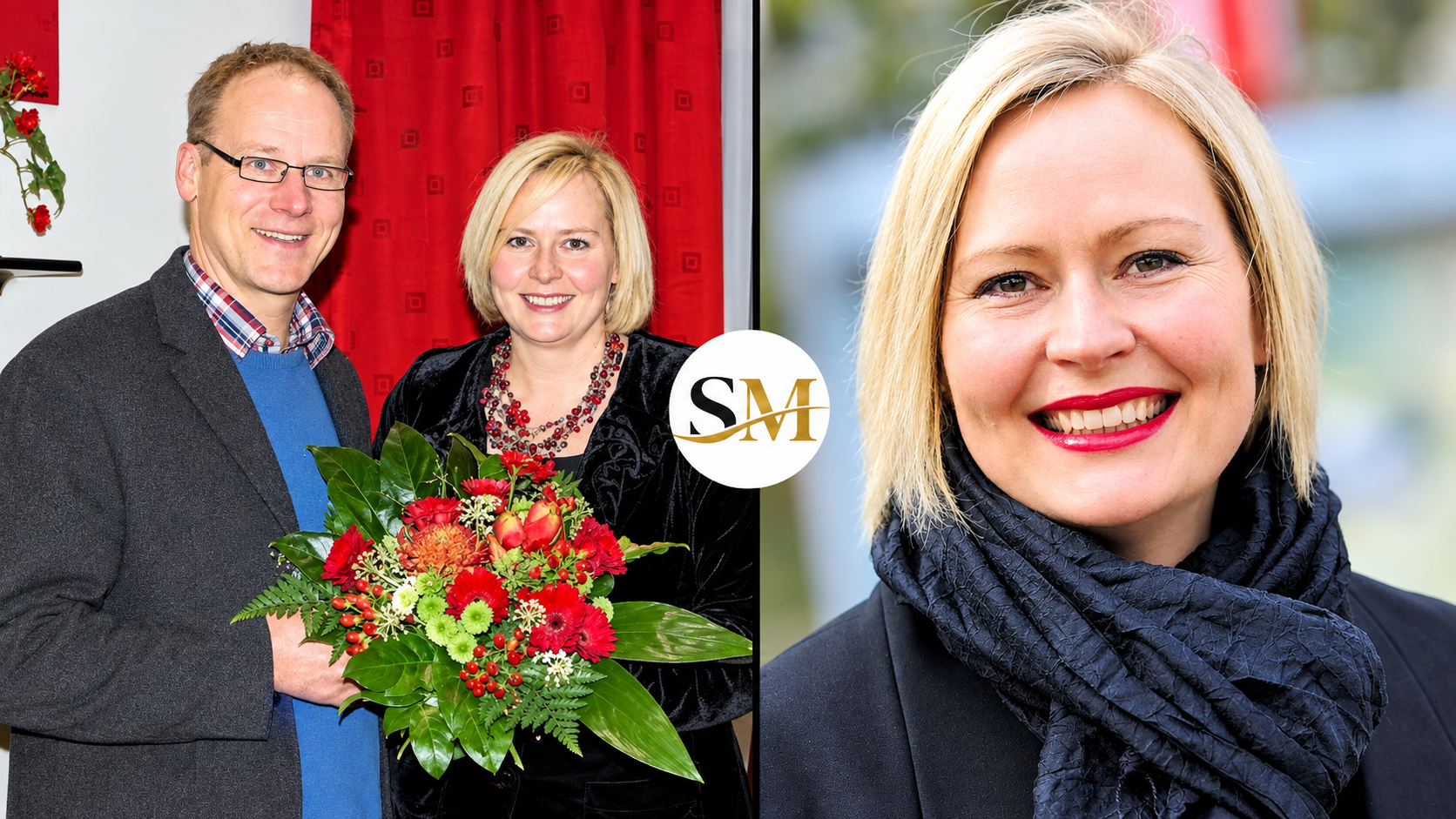
Sonja Jürgens is a name that surfaces again and again in discussions of Udo Jürgens, the Austrian singer and composer who became one of the most successful entertainers in German-language pop music history. Born in 1966, Sonja is one of several children Udo Jürgens had across different relationships, and her story became especially public after his death in December 2014, when a lengthy inheritance dispute placed the entire Jürgens family under media scrutiny. This article brings together everything reliably documented about Sonja Jürgens, her parents, her half-siblings, the inheritance case that followed her father’s passing, and her quieter life today in Berlin, while being clear about which details remain confirmed and which are still unknown.
Who Is Sonja Jürgens?
Sonja Jürgens was born on January 11, 1966, as a daughter of singer Udo Jürgens. She is generally described as his non-marital, or “uneheliche,” daughter, meaning she was born outside his marriage to his first wife, Erika “Panja” Meier. Because of this, Sonja did not grow up in her father’s household the way his two children from that marriage did, and for many years she remained largely outside public view compared to other members of the family.
It is important to separate Sonja Jürgens, the daughter of Udo Jürgens, from another public figure with the same name. A German politician named Sonja Jürgens, born in 1978 in Gronau, served as mayor of that town from 2013 to 2018 as a member of the SPD. The two women share no family relationship whatsoever, and confusing them is one of the most common errors made when searching for information online.
Sonja Jürgens first addressed her background directly in a 2008 interview with the Berliner Morgenpost, in which she spoke publicly about her mother for the first time. Outside of this interview and her appearances connected to her father’s documentaries, including Udo Jürgens – Mitten im Leben, and occasional appearances such as at the ZDF-Fernsehgarten, she has largely avoided sustained media attention throughout her adult life.
Udo Jürgens: The Father Behind the Fame
Udo Jürgens was born Jürgen Udo Bockelmann on September 30, 1934, in Klagenfurt, Austria. Over a career spanning more than fifty years, he composed close to a thousand songs and sold over one hundred million records, making him one of the best-selling recording artists in German-language music history. He won the Eurovision Song Contest for Austria in 1966, the same year Sonja was born, and remained a fixture of German-speaking popular music until his death.
In July 2010, Udo Jürgens officially changed his first names to Udo Jürgens, though he kept the family surname Bockelmann on paper throughout his life, using Jürgens only as his public artistic identity. He obtained Swiss citizenship in 2007 and continued touring well into his later decades, regularly appearing on stage and television and drawing large audiences across generations. He died on December 21, 2014, in Münsterlingen, Switzerland, at the age of eighty.
Udo Jürgens left behind a large and complex family. Alongside his marriage to Erika “Panja” Meier, which produced two children, John and Jenny, he also had non-marital daughters, including Sonja Jürgens and, separately, Gloria Burda. This combination of marital and non-marital children became central to the inheritance proceedings that followed his death, and it is a key reason Sonja Jürgens became more visible in the media during that period.
The Mystery Surrounding Sonja Jürgens’ Mother
One detail that continues to generate curiosity about Sonja Jürgens is the identity of her mother. According to reporting on the family, Udo Jürgens had a brief relationship with a very young woman, described as around seventeen years old at the time, and Sonja was born from that relationship in 1966. The mother chose to remain anonymous for decades, and her identity has never been confirmed publicly, even after Sonja herself gave interviews about her upbringing.
This stands out as one of the few genuinely unresolved parts of an otherwise thoroughly documented family history. Udo Jürgens’ marriages, his children, his professional career, and even the details of his will have all been covered extensively in interviews, biographies, and court reporting, yet no verified source has ever named Sonja’s mother or provided background information about her family.
Because of this gap, nothing reliable is known about Sonja Jürgens’ maternal grandparents or any extended family on her mother’s side. Any website that claims to name her mother directly should be treated with real caution, since neither mainstream reporting nor any statement from the Jürgens family has ever confirmed such a detail.
Sonja Jürgens and Her Half-Siblings John and Jenny Jürgens
Sonja’s closest and most publicly documented half-siblings are John and Jenny Jürgens, the two children Udo Jürgens had with his first wife, Erika “Panja” Meier. John Jürgens, born John Bockelmann on February 20, 1964, in Munich, is a German actor and DJ who trained in classical acting and dance across Zurich, Salzburg, and Munich before completing further training at the Lee Strasberg Institute in New York. He appeared in several film comedies during the 1980s and has since built a life as an actor, DJ, and father of three children with his wife Hayah, whom he married in 1998.
Jenny Jürgens, born January 22, 1967, in Munich, is a German singer, actress, and television presenter. She began performing at just fifteen years old, appearing alongside established actors in an early film role, and had a chart single in 1984 recorded as a duet with her father. In 2014, the same year her father died, Jenny formally changed her legal surname from Bockelmann to Jürgens, adopting officially the name the family had already used publicly for decades.
Because John and Jenny were born within Udo Jürgens’ marriage, they occupied a different legal position from Sonja and Gloria Burda when it came to Swiss inheritance law, being named principal heirs rather than legatees. Despite this legal distinction, all four siblings became directly linked through the events that unfolded after their father’s death.
Sonja Jürgens and Half-Sister Gloria Burda
Gloria Burda is another of Udo Jürgens’ non-marital daughters, born from a separate relationship and considerably younger than Sonja. After their father’s death, both Gloria and Sonja were named as legatees under Swiss inheritance law, a status distinct from the principal heirship given to John and Jenny. This shared legal position placed the two half-sisters in a similar starting point within the estate proceedings, even though their personal relationship appears to have been far less close.
Early reporting on the dispute noted that Sonja Jürgens, John Jürgens, Jenny Jürgens, and Udo Jürgens’ final partner, Michaela Moritz, were largely aligned with one another, while the main friction in the case came from objections raised by Gloria Burda regarding how the estate was being managed and distributed. This placed Sonja in a position of relative agreement with her older half-siblings throughout much of the legal process.
Despite the tension the case created, there is no public record of lasting personal hostility specifically between Sonja and Gloria outside of the courtroom disputes themselves, and both women appear to have returned to largely private lives once the matter was resolved.
The Jürgens Inheritance Dispute
After Udo Jürgens died in December 2014 leaving an estate reported at around fifty-two million euros, his will, drawn up under Swiss inheritance law, named John and Jenny Jürgens as principal heirs, splitting the bulk of the fortune and the rights to his song catalogue between them equally. Sonja Jürgens and Gloria Burda were each named legatees, reportedly receiving specific sums in the range of roughly 8.3 million euros apiece, while Udo Jürgens’ final partner, Michaela Moritz, received the family house on Lake Zurich.
Disagreements soon arose over specific items in the estate, including a teakwood motorboat that Udo Jürgens had reportedly promised verbally to his brother, Manfred Bockelmann, with Sonja Jürgens herself named as a witness to that statement, along with disputes involving artwork and other assets not initially listed in official inheritance documents. Gloria Burda contested several aspects of how the estate was being managed, including objections to the appointed estate administrators and questions about a private jet purchase, all of which extended the legal process considerably.
The dispute was not fully resolved until November 2018, nearly four years after Udo Jürgens’ death, when the remaining disagreements between the heirs and legatees were finally settled through the courts. Throughout this lengthy and highly public process, Sonja Jürgens maintained a comparatively low media profile, with most detailed reporting focusing instead on public statements from John Jürgens and the legal actions taken specifically by Gloria Burda.
Sonja Jürgens’ Career and Life in Berlin
Away from her father’s legacy and the inheritance proceedings, Sonja Jürgens has built a career connected to fashion. Public profile information describes her work in fashion and prop styling, alongside celebrity consulting carried out between Berlin and New York. This career path sets her apart from several of her half-siblings, placing her work behind the scenes of the fashion and media industry rather than in front of cameras or on stage, as her father, John, and Jenny each did in their own ways.
Sonja Jürgens is married to designer Nicolas Barsan, and together the couple has a son named Milo. The family is based in Berlin, and her husband has previously given an interior design publication, AD Magazin, a glimpse inside their home, offering one of the very few detailed public looks into Sonja’s private family life outside of interviews tied directly to her father.
Beyond these occasional appearances connected to her husband’s design work or public tributes marking anniversaries of her father’s death, Sonja has kept nearly all other details of her personal and professional life away from ongoing media coverage, choosing instead a quieter, less publicised existence than several of her relatives.
Why Sonja Jürgens Chose a Private Life
Given the sustained public interest surrounding the Jürgens family, particularly following Udo Jürgens’ death and the years-long inheritance dispute that followed, Sonja’s decision to remain largely private is notable. Unlike John and Jenny, who built performing careers at least partly connected to their father’s fame, or Gloria Burda, whose name became widely known specifically through the legal proceedings, Sonja has limited her public statements to a small handful of interviews and appearances tied to family milestones.
This pattern extends to how she has handled some of the most sensitive parts of her own story, including the identity of her mother and the finer details of her family life with her husband and son, both of which she has kept out of ongoing public discussion even while acknowledging her connection to one of the most famous families in German-language entertainment. Choosing this level of privacy is a decision many relatives of public figures make, particularly when, like Sonja, their own career and daily life lie outside the entertainment industry itself.
Conclusion
Sonja Jürgens is a well-documented member of the Jürgens family, connected through her father, the legendary singer Udo Jürgens, to half-siblings John Jürgens, Jenny Jürgens, and Gloria Burda, and to a difficult, multi-year inheritance dispute that played out publicly after her father’s death in December 2014. At the same time, several key details about her own personal history, most notably her mother’s identity and the fuller picture of her family life in Berlin with husband Nicolas Barsan and son Milo, remain private by her own apparent choice. Anyone researching Sonja Jürgens should rely on these confirmed family, legal, and career facts rather than on speculative claims circulating about her mother or personal life, and should recognise that her privacy, much like her decision to build a career in fashion rather than entertainment, reflects a deliberate choice rather than an unresolved mystery.
